
How to Score AI Opportunities Before You Start

What actually goes into an AI strategy, and how do you evaluate AI use cases? Here's how you rank opportunities and turn them into something that works.
The AI Portfolio Grid Sorts Opportunities Fast
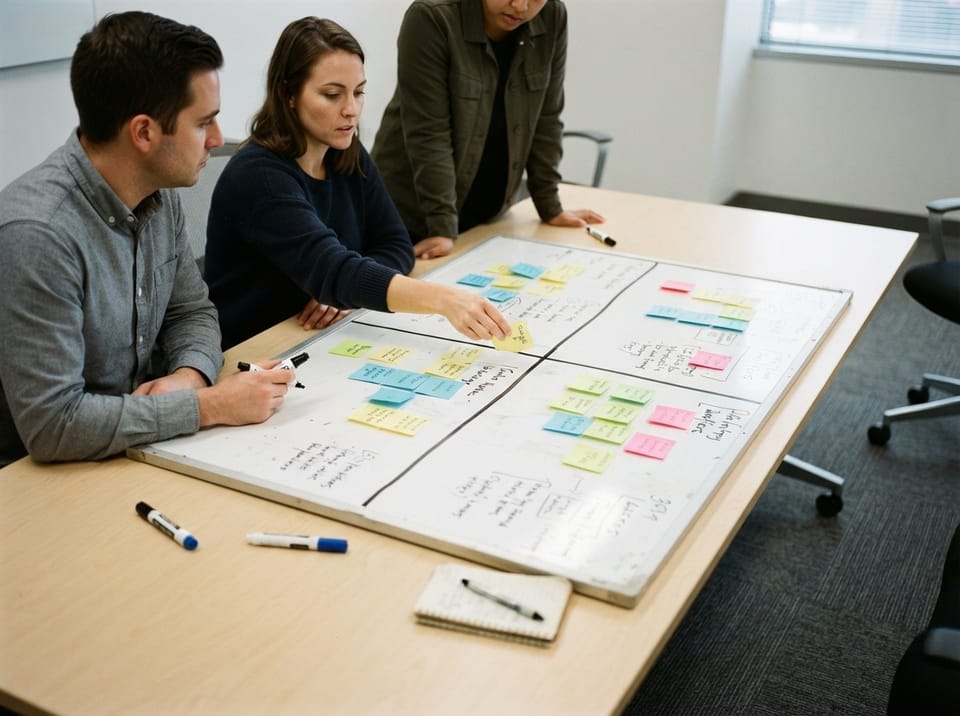
The AI Portfolio Grid is a 2x2 matrix to score AI opportunities:
- Big prize, Ready now = Accelerate now
- Big prize, Not ready = Invest to unlock
- Small prize, Ready now = Quick wins
- Small prize, Not ready = Deprioritize
Two questions place an initiative on the matrix:
- Can we execute the initiative today?
- How big is the prize?
Start With Your Goals and Find the Limits
Find what's limiting each goal. Limits come down to people, process, data or technology. Treat all four as suspects. Most companies fixate on data.
Score impact against those goals. Three steps to assess impact: interview the CEO, interview the leaders who own each goal, and sort what you hear into people, process, data and technology.
Take Inventory of What's Already Running
Before adding anything new, take stock of the AI work already underway. Put it on the grid with your new ideas. The scoring is the same, with a higher bar: existing work has to show it's working.
Make one of four calls: continue, edit, merge, or stop.
Every Pilot Needs an Owner, an Outcome, and a Cost
To earn a start and a pilot, a new initiative needs three things: a business owner, a checkable outcome, and a cost estimate.
Small fixes, like automating a recurring report or checklist, rarely tie to a company goal, but they add up. If one is cheap, has an owner and will show results within weeks, do it.
A pilot should show four things:
- The work got faster, cheaper or better without quality dropping
- People used it in their daily work
- The AI caused the gain
- The cost and benefit assumptions held up
Write go/no-go criteria before the pilot starts. Write down what the pilot must show to expand, be revised or stop.
Eight Questions to Check Before Production
Check readiness before production:
- Is the value at stake clear?
- Is the process understood and measurable?
- Is the data accessible?
- Can someone deploy and support it?
- Will the intended users participate?
- Does the team have capacity to change how it works?
- Does a business owner own the result and the decisions?
- Are legal controls and guardrails in place?
This checklist of systems that break before an AI agent goes live covers more of what needs to work before anything reaches production.
Rank by Odds of Success Before Return
Your first wave comes from Accelerate Now. Within it, rank by odds of success first, then by return among the ones likely to work.
Early initiatives with good odds tend to share three traits: most readiness questions already have a yes, the owner wants it, and the work is contained.
Run Quick Wins alongside the first wave. Quick Wins are cheap, and people feel the difference fast.
Fund Enabling Work Even When It Returns Nothing Directly
The exception to ranking by return is enabling work. When one gap, like unclear policy, unreachable data or leaders who've never used the tools, blocks several big-prize initiatives, closing it belongs in the first wave even though it returns nothing directly.
With a track record, go after the biggest prize the evidence says you can win. If you're looking for a more detailed process on how to turn a business goal into an AI pilot, that six-step framework covers the path from painful workflow to redesigned process.
Build the Track Record Before You Go Bigger
An AI strategy isn't about finding the flashiest use case. It's about scoring opportunities honestly, funding what's ready, and building proof before you scale. The companies that win with AI pick contained work with willing owners, run quick wins alongside bigger bets, and let early evidence decide what's next.
The grid gives you a way to see everything at once. The readiness questions tell you what's actually possible today. And the track record you build in the first wave earns you the right to go after the bigger prizes.
Start with what's ready, prove it works, then go bigger.